Writings on early America from a coastal town
Who we are
Mary Foster Morgan
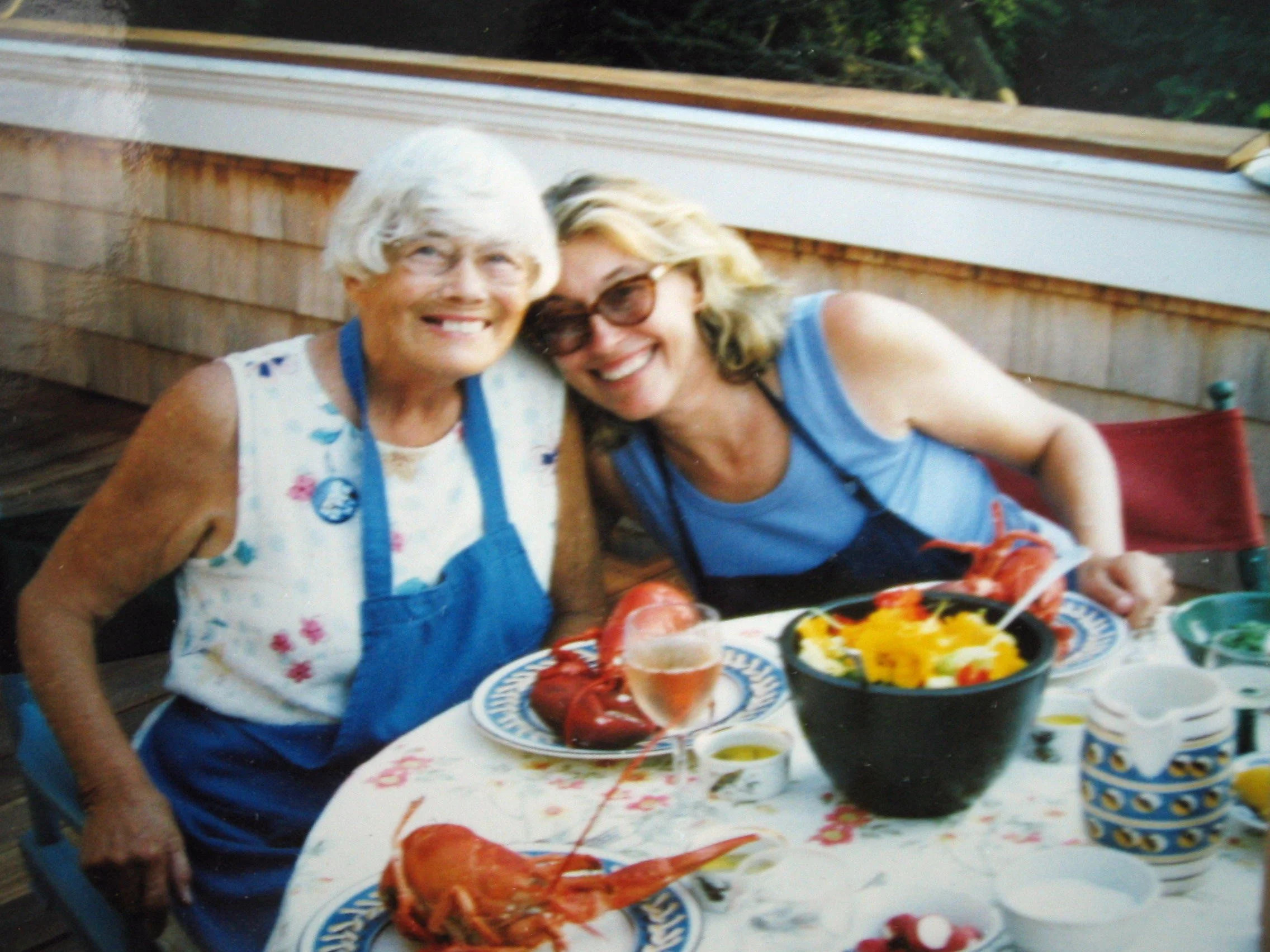
Mary Foster Morgan spent childhood summers at her grandfather's East Hampton farm, Sherrill's Dairy, where she listened to her grandmother's family stories and learned to cook what was fresh, deliciously ripe and in-season. Those early experiences enjoying local food became a lifelong value.
After graduating from Skidmore College and the Whitney Museum's Independent Study Program, Mary spent twenty years in New York's arts and museum world, as director of an artists copyright society and director of Learning Through Art, The Guggenheim Museum Children's Program.
In 1995, Mary moved to the North Fork of Long Island where she met her husband Tom, a wine expert and mushroom forager. Former board member of the Peconic Land Trust and co-founder of Slow Food East End (2004), she remains committed to preserving the East End's farming and fishing heritage and co-authors the "Climate Local Now" column for the East End Beacon
Mary launched Sherrill Diaries and its blog, Saltair Wayfaring, to explore coastal history and her family's colonial roots—a homecoming to those stories first heard at the Sherrill farm.
Sherrill Foster
Sherrill Foster, East Hampton Town Historian from 2003 until her death in 2007, was a graduate of Brown University ('43) with advanced degrees from Villa Schifanoia, Florence ('72) and SUNY Binghamton ('77).
Sherrill grew up in East Hampton in the 1858 Greek Revival house where four generations of her family had lived, on property her great-great-grandfather purchased in 1792 after serving in the Revolution. She was intimately acquainted with the people, places, and stories of early East Hampton—walking past the Dominy workshop and mill on her way to school, remembering Main Street before high privet hedges, when soft ocean light permeated everywhere. As Sherrill noted, East Hampton remained relatively unchanged for 200 years, and in many ways, she was a living link to those earlier times.
After serving in the Women's Army Corps during WWII, Sherrill moved to western New York to marry and raise a family. She returned to East Hampton in the 1970s to pursue a master's degree in architectural history. Her 1977 thesis, "Boarders to Builders: the Beginnings of Resort Architecture in East Hampton, Long Island 1870-1894," documented this era for the first time and led to exciting discoveries—30 architectural drawings by James Renwick Jr. for the Frederick Gallatin house and over 150 blueprints for other estates.
Sherrill curated Guild Hall's popular exhibition "1630-1976 Life Styles of East Hampton, a Bicentennial Exhibition," profiling fifteen intriguing residents—from a Montaukett to a Gardiner to a Dominy—across 300 years of the town's history. As director of the first cataloging project for Clinton Academy, she developed a keen interest in Reverend Samuel Buell (1716-1798) and East Hampton's strong commercial ties with New Haven and other ports in New England. In 1992 she designed "Maidstone Revisited," a two-day history symposium at Southampton College featuring new research by twelve noted historians, curators, and genealogists.
Knowledgeable about genealogy, historic architecture, settlement patterns, and Native American and African American traditions, Sherrill believed information should be based on primary sources. She traveled to England to research original birth documents, attended professional conferences, transcribed diaries, and meticulously traced genealogies. She published and lectured widely, and for a decade authored "Around the Green," a history column for the East Hampton Independent.
A well-respected member of the Southampton Local History Study Group, Sherrill was adept at seeing interconnections among diverse areas of knowledge and generous in sharing her research with fellow historians, students, and the public. Also a modernist, she loved living in a passive solar house designed by her son Jonathan Foster Architects.
Enthusiastic in her quest for "true history," Sherrill's disarming originality is evident throughout her writings. An avid reader, she amassed an impressive collection of literature and ephemera on early New England and East Hampton, which her daughter Mary donated to the East Hampton Library as the Sherrill Foster Early American Research Collection. Fellow historian Hugh King said of Sherrill, "She is a woman who can never be replaced.".