The Hazardous Adventures of the Refugees of 1776 - I
#3 in East Hampton and the Revolution — A Series
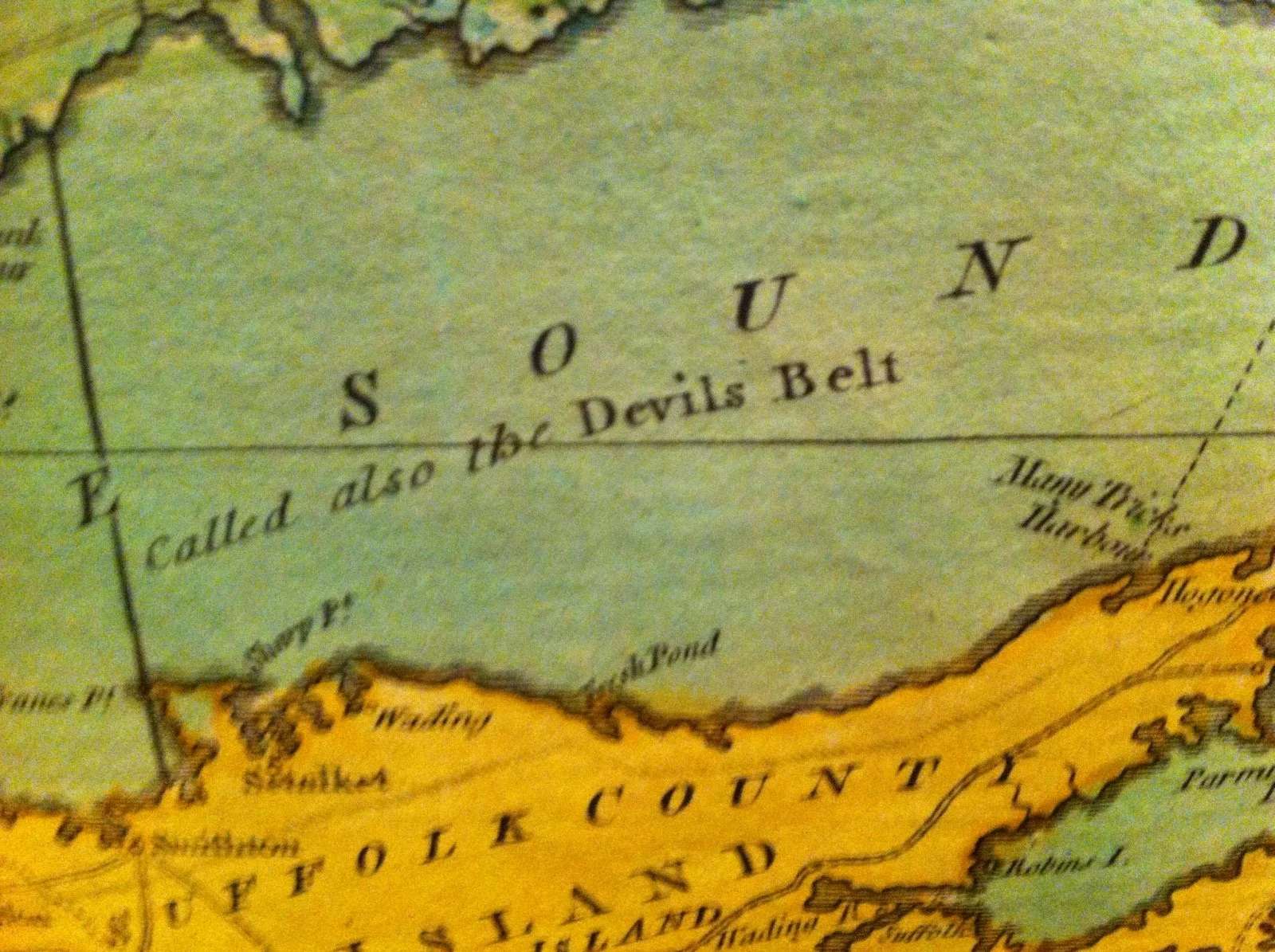
Detail, Map of New York and New Jersey, Thomas Pownall, 1776
PART I: The Emergency and the Crossing
Introduction: Patriots and Refugees, Both
My mother, Sherrill Foster, spent decades as a researcher and writer immersed in the documentary evidence of East Hampton's past. As Town Historian from 2003 to 2007, she had a passion for reading through account books, pension applications, and auditor's claims and seeing not just names and numbers, but her neighbors' lives caught in extraordinary circumstances.
This unpublished essay of 1998 exemplifies her approach to historical writing. Where many accounts of the Revolutionary War focus on battles and generals, my mother found her story in the refugee claims filed by ship captains and displaced families. She discovered a massive logistical operation: the emergency evacuation of over 1,000 Long Island residents across the Sound to Connecticut in the late summer and fall of 1776.
What makes her work distinctive is her attention to the physical reality of displacement. She shows us exactly what people carried with them—”riding chairs,” looms, shoemaker's tools. the ninety-four head of cattle that had to be temporarily stalled in ship holds. She tracked the oars lost, the whale boats captured by the enemy, the high fees demanded by Captains who knew the risks: “Scarse a day but thire was Crusers seen.”
The question that drives this first part of her refugee study is deceptively simple: How do you actually move 1,124 people and everything they need to survive across a body of water patrolled by enemy ships? The answer inspired her to excavate bills and receipts – and in those bills she found Captain Pelletreau making three trips back for his riding chair, Captain Vail calculating the cost of three hired hands at three shillings per day, Captain Sheffield explaining why he had to pay "thrible wages" to sailors who could see British warships every single day. Captain Dayton weather-bound in New Haven "waiting for wind.”
This is the arithmetic of survival. How many wagon loads? How much does it cost to store goods in Hartford? What do you do when you've moved your family to Chester but realize you left the flax and corn behind?
Her meticulous research in 1998 reading refugee claim records reveals the economic structure of pre-Revolutionary East Hampton—a prosperous community of merchants, weavers, cordwainers, and farmers whose wealth was built on the West Indies trade and the vast grazing lands of Montauk. This was a community active in self-government, where every (free) male in the town capable of bearing arms, signed The Association, a loyalty pledge to the Continental Congress.
She documents that there were enslaved people who labored to create the "salable products" that fueled this economy, never romanticizing the past but presenting it with scholarly detail. Understanding what East Hampton was before the war makes the scale of the disruption visible.
This is history grounded in primary sources, alive with human detail, and attentive to the realities that shaped people's lives during wartime. My mother’s interest in history was not just the momentous decisions of leaders, but also those of ordinary people who packed their belongings into wagon loads, paid for three days of a hired man's time, and hoped the wind and tide would be favorable.
What emerges is an honest narrative: yes, we were patriots who fought and sacrificed for independence, and also, we were desperate refugees scrambling to save what we could under British occupation.
A note on language: My mother used the terminology found in the historical documents she cited. I have updated some of her language to reflect contemporary usage — "enslaved people" for "slaves," and "African Americans" for "Negros" — while preserving all other elements of her original text.
The Hazardous Adventures of the Refugees of 1776
#3 in East Hampton and the Revolution — A Series
By Sherrill Foster, East Hampton Town Historian 2003-2007
A series based on Around the Green columns, updated by Mary Foster Morgan, 2026.
PART I: Emergency and Crossing
In 1776 the Town of East Hampton was a thriving, prosperous community of 1,250 persons, 318 of them males over 16. East Hampton's well-to-do families lived in large houses on 8 or 10 acre homelots, some on the original lot their forefathers had purchased in 1648. Several men were merchants, engaged in the well established West Indies trade. Others supplied the goods for trading. There were 115 farmers, 66 weavers and 51 cordwainers or leather workers. The salted beef, hides, tallow, candles, feathers, barrel staves, and woven cloth were the products shipped to the Barbadoes, as well as live horses that were used in the sugar mills there.
During the day the wide main street was filled with animals—cows, sheep, swine, geese and chickens. The ubiquitous picket fence kept the animals out of the housewife's garden and yard. The street was lined with large English style barns adjacent to the two story houses, many of them newly built in mid-century. At that time the new technology of open hearth cooking requiring the large kitchen of the salt-box style house intrigued the residents who either built new or added on the long low kitchen area at the back of their house.
Aaron Isaacs, the merchant, had built a new salt box house with Newport, Rhode Island detailing on his tiny quarter acre lot. Colonel Abraham Gardiner, a cousin to the proprietor of Gardiner's Island, lived in a 'mansion house', a two-story house in the typical Connecticut River Valley gambrel roof style built in 1744. Both of these houses can be seen today. [Home Sweet Home and Col. Abraham Gardiner House.] Other large houses from this period are Colonel David Mulford's house [Mulford Farm]; the present 1770 House which was Town Supervisor Burnett Miller's home, and across the street, Captain Thomas Wickham's saltbox.
An Economy of Livestock and Trade
Livestock was the most viable source of income, the source of many products for trade. Since 1687 the grazing lands of Montauk had been purchased by the heads of these families. Their children inherited the shares. Their sheep, cattle, and horses were herded there, each with the owner's registered earmark. In March the sheep were driven onto Montauk for grazing. Three houses owned by the Proprietors were provided for the herdsmen and their families on yearly leases. By May, the sheep would come 'off' and the cattle would be herded 'on' Montauk. It might take two days to drive the cattle there. In 1775-76 General George Washington's aides estimated that there were 100,000 horned cattle and more than that number of sheep on Long Island; several thousand of these were on the Montauk peninsula.
The cattle and the sheep converted into products desired by worldwide trade. As noted, several East Hampton families were merchants.
Shore whaling had been a source of income. In 1715, Samuel Mulford, Merchant, as he signed his name, had gone to London to complain to the Board of Trade about unwarranted taxes on this type of whaling. A whaling dory was kept in a shed near the main barn. When the call of the conch shell was heard, the pre-arranged crew of men rushed the dory to the ocean beach, launching it through the waves, rowing out to harpoon the sighted whale or whales. The captured whale provided yet more products of commercial interest. Aaron Isaacs procured the oil from the spermaceti whales to sell to Aaron Lopez in Newport, a merchant who specialized in the high-quality spermaceti candles. By the 1770s there were no longer the great schools of whales drifting alongshore and this type of whaling was becoming unprofitable.
Weavers, a Minister and Enslaved Labor
Forty-five African-Americans helped many of these families to create the salable products. David Mulford, Jr., a weaver, had 8 enslaved persons. He lived in his father's house, Colonel David Mulford, on James Lane, [now owned by the East Hampton Historical Society]. His weaving room was on the second floor, on the southeast corner with its large 10-over-15 pane window. Jeremiah Miller, a prosperous weaver, had four enslaved workers, three weavers had only one each. Six farmers had one enslaved person, two joiners each had one enslaved worker. One farmer, John Parsons, 3rd, had two enslaved persons and Samuel Mulford had three to help him with his farm work.
The minister, the Reverend Samuel Buell, had three enslaved people who ran his farm for him and helped his wife. Buell, an organization man, visited all over the Island, using his chaise or “riding chair”, a small two-wheeled horse-drawn vehicle. He had been the minister since the mid-century and enjoyed the confidence of his parishioners.
The Association is Signed
On April 29, 1775, ten days after the “shot heard ‘round the world, ” East Hampton Town votes to adopt New York County’s Articles of General Association – essentially a loyalty pledge in which signers vowed to follow the demands of the Continental Congress and Provincial Conventions.
That day 234 able-bodied men of East Hampton sign:
for the purpose of preserving our Constitution and opposing the execution of the several arbitrary and oppressive acts of the British Parliament, until reconciliation between Great Britain and America on Constitutional Principles (which we most ardently desire) can be obtained….
The document notes that it contains the signatures of every male in the Town…capable of bearing arms. It was a signed protest against the British misrule and bound the signers to assist, in what way they might, the cause of American Independence.
That June and July men from East Hampton and Southampton enlist in a company being organized by Captain John Hulbert, a wealthy Southampton merchant.
Buell would write to Congress, saying that the livestock on the Montauk peninsula must be guarded from appropriation by the British. The Gardiner's on their Island also had several thousand cattle and sheep. To fight the war successfully, General George Washington could not spare the large numbers of men to do this, even though it meant that much of the livestock fell into British hands. The East Hampton militia units then tried to guard the livestock.
In August 1775 thirteen British ships sail into Gardiner’s Bay, demanding provisions from Abraham Gardiner. East Hampton Trustees agree to take livestock off Montauk.
During the following months, and the first half of 1776 the British were bottled up in Boston under Washington's landside blockade. However, their ships could move along the coast and take provisions from any area.
In April 1776 armed British ships appeared in the fog off Montauk. (That was the origin of the oft-repeated memory of Jonathan Dayton and a handful of East Hampton men being sent to Montauk to ward off any British landing. Dayton marched his men around a hill in view of the fleet, having them turn their jackets inside out on each circuit, appearing as a larger patrol. The British sailed off.)
On July 4 of 1776 the Declaration of Independence is adopted by the thirteen colonies.
Then the fateful days of the end of August, when the British land on western Long Island, the Battle of Long Island begins and ends in two days.
Evacuation begins: August-September 1776
On August 29, 1776, after General Washington withdrew from the western end of Long Island, the inhabitants of Suffolk County were urged by the Provincial Congress to "remove as many of their women, children and slaves and as much of the livestock and grain to the Main as they can and that this convention will pay the expenses of removing the same."
The British ordered Long Island residents to swear an oath of loyalty to the crown. At the same time, 210 ship captains—129 from Long Island and 81 from Connecticut—transported refugees and their goods across the Sound in schooners and sloops. Many of the Long Island captains became refugees themselves. Most departures were from the newly constructed Town dock at Sag Harbor, with arrivals at Middletown, Killingworth, Saybrook, Haddam, East Haddam, Stonington, New London and Guilford in Connecticut.
The big new dock at Sag Harbor, that Captain Thomas Wickham and others had urged the Towns to construct in 1770 became the starting point.
At first, everyone thought the war would be of short duration. The refugees had left their homes on short notice, and with little provision for the future in money, clothing or food. Many 'leased' their stock and pastures to a neighbor.
1,124 Refugees – What They Carried
Recent accounting shows that there were 1,124 refugees from Long Island. They had to be accommodated in homes on the Connecticut shore and rivers.
The “new” dock becomes useful for Captain Zebelon Cooper of Southampton, who, on September 2, 1776, began moving residents to Saybrook in his 60-ton vessel. On his first trip he took 94 persons, Southampton families and their goods. His second trip was merchandise for Colonel Livingston. His third trip included 63 passengers, along with 10 cows, 2 horses, 30 sheep, 17 hogs and 22 loads of goods. These “loads” appear to be wagon loads of people's possessions.
When the passengers arrived in Saybrook, Captain Richard Dickinson lodged, fed the refugees and stored their household goods until more permanent lodging could be found. By October he had provided 1,479 meals, and 508 lodgings. He had to keep the cattle and horses, and sheep, finding pasturage for this livestock. "Their Is one trip from New London to Sebrock by order of Commity toock seven famylies Som landed att Sebrock & Deep River/Essex by order of Commyty afterward foure famylies Carryed to Sebrock and ordered frm their to Lime by Sebrock Commity. 24.0.0".
Captain Samuel Sanford presented his bill to the Auditors. "Saybrook September ye 13th A D 1776 Mr. Joseph II and Jonathan Jr. Conkling of Longiland to Samll Sanford Dr to my man & boate Near three Days to carry yr goods & famely to Chester 2 Loads 15/..." On October 8th Joseph Conkling paid for this first removal to Saybrook. On October 12, the Conklings wanted to go to Chester, with their goods—"flax corne portators &c" and family. This cost 12/. By 14 March 1778 the State of New York had paid these expenses.
Captain Elias Pelletreau paid for the transport of 3 [wagon] loads of goods from Southampton to Sagg Harbour; he then had to pay to be transported from Saybrook to Hartford, and finally these same goods to Simsbury, a hamlet to the west of Hartford. He had to pay for the storage of his goods in Hartford.
Captain Pelletreau then returned "with a hir'd man to fetch off Cattle & affects at which time brot off 2 horses and 11 cattle". This hired man was paid in cash. Captain Pelletreau needed his “riding chair”. Certainly he did not want the British soldiers using it and probably destroying it. The freight for the horse and chair from Sag Harbor to Saybrook was 0.9.0.
Riding chairs were very popular luxury items. In the listing of refugee claims (in Mather's Refugees...) there are ten riding chairs accounted for. The cost of transporting such items varied from 0.10.0 for Captain Jonathan Tuthill to 0.6.0 for Captain Nathan Fordham.
Other people were able to get their occupational material across to Connecticut. John Drake took his Loom and Tackle, Doctor Walker had his chest, Walter Howell his desk; David Landon had one chest of shoemakers’ tools, another brought “Ropemakers Utintials”, "clock reel, wooling wheal and duck wheel", a bellows, blacksmith's tools, a turning lathe. All this had to be crated and placed aboard the schooners and sloops used as transports.
Livestock and Risks
The animals had to be placed in temporary stalls. Captain John Vail said "I have carried Ninety four head of Cattell & horses be Side Sheep & hogs In Carry Ing Stock I was att the Expence of three hands be Side my Self which with their wages a three shillings pr Day and their Liveing was not Les then one Doller pr day." Repair of damage done to the ships by the livestock was also listed. The holds of the ships had to be cleaned after each voyage.
All this was not without risk. Captain Isaac Sheffield of Stonington felt that the Claims Auditors did not provide sufficient pay. He wrote "the Resk was so great, for thire was Scarse a day but thire was Crusers seen of ye East End of ye Island by which we Expected to be cut of Every time we Past, and further ye Resk being so well known by our inhabitants hear I Could not git hands att that time under thrible Wages, and also obliged to go Duble mand and well armd which made it very Chargeable...why should one man Resk his whole liveing to Save another mans Exsept he is alowed Something Edequate to the Resk..."
The seamen should be "alowed Something Edequate to the Resk..."
Captain Ebenezer Dayton removed his family and property on 2nd and 3rd of September 1776. He went back three different times to bring off more property. These attempts were unsuccessful. "Going with a borrowed whaleboat which the Enemy took with other Effects 6.0.0. 6 oars, 1 &c. The value of the Whale Boat lost prized at blankit and other things lost in the boat", Dayton wrote on his bill. Making another attempt, he had to stay 10 days in New Haven while "waiting for wind and a Ship to go away". He charged 3.0.0 for that delay.
The Arithmetic of Survival
The emergency evacuation of over 1,100 Long Island residents in the late summer and fall of 1776 was a massive logistical operation coordinated under desperate circumstances. The bills and receipts that survived in the refugee claims reveal the unglamorous reality of becoming a refugee: the cost of hiring a man to help move cattle, the freight charges for a riding chair, the meals that had to be provided while families waited for more permanent lodging.
Captain Richard Dickinson alone provided 1,479 meals and 508 lodgings by October 1776. Captain John Vail transported ninety-four head of cattle and horses at considerable expense. Captain Isaac Sheffield risked his "whole liveing" sailing past British cruisers visible nearly every day. Captain Ebenezer Dayton lost a borrowed whaleboat, six oars, a blanket, and ten days waiting for favorable wind.
These are the details of survival: how you actually move a population and everything they need to live across a body of water patrolled by enemy ships. The records reveal the truth of what it meant to flee East Hampton in 1776.
At first, the refugees thought the war would be brief. They expected to return home soon. The reality of seven years of occupation and exile is detailed in Part II.
Sources:
For more information on these events and the soldiers and sailors named, see Frederic Mather, Refugees of 1776 from Long Island to Connecticut (Albany 1913, reprint Genealogical Publishing Co. 1972, and Clearfield Company 1995).